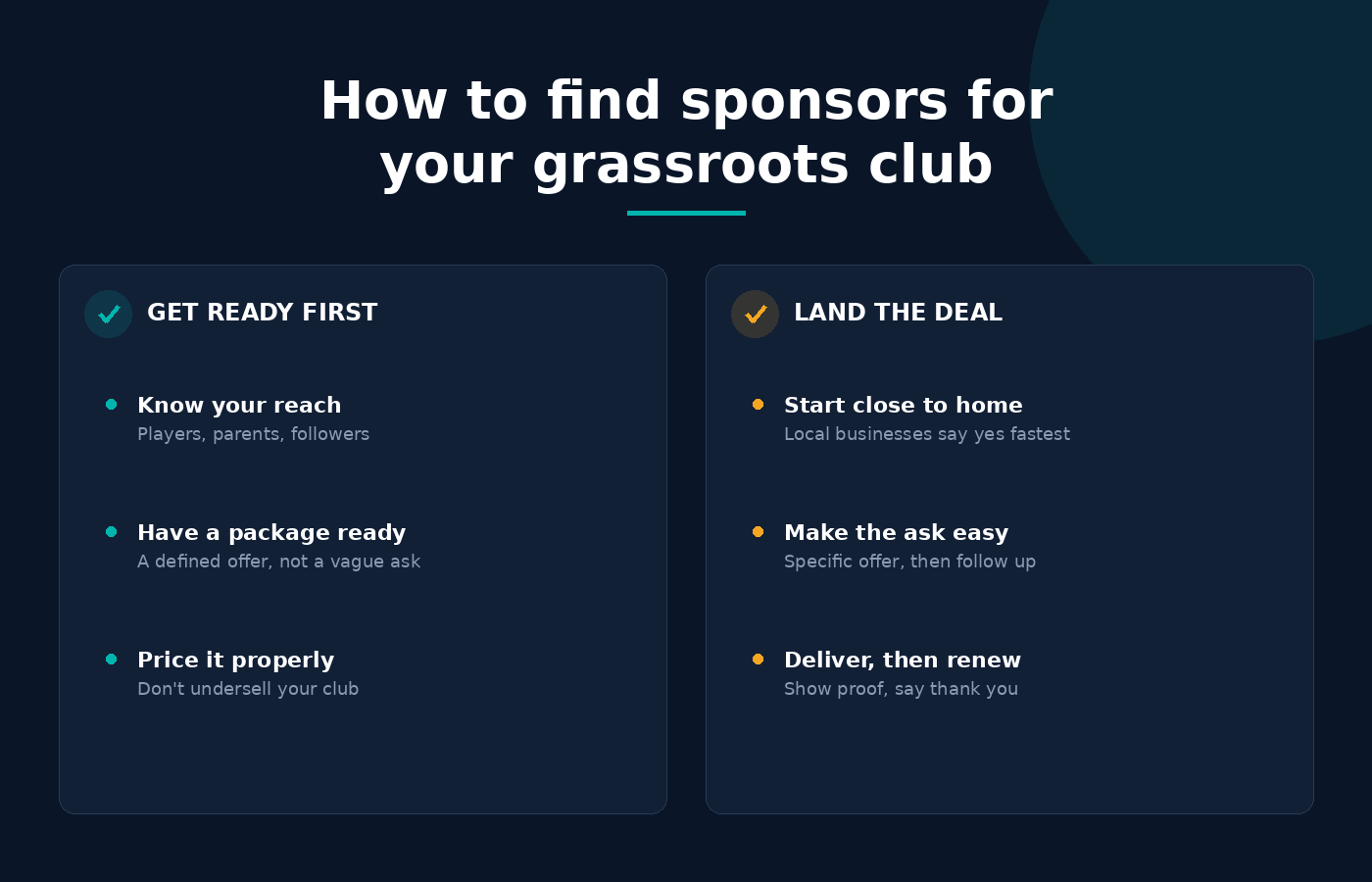
How to Find Sponsors for Your Grassroots Sports Club in 2026
A practical guide for treasurers, secretaries, and committee members who want to secure sponsorship — without wasting volunteer hours.
If you’re running a grassroots sports club, you already know the drill. League fees go up, kit costs never come down, and the fundraising rota lands on the same three people every season. Sponsorship is the obvious answer — but most clubs either don’t know where to start, or they’ve tried and hit a wall of unanswered emails.
This guide breaks down how grassroots clubs across the UK are actually landing sponsorship deals in 2026, what sponsors want in return, and how to price your packages so businesses say yes.
1. Start With What You Already Have
Before you approach a single business, get your own house in order. Sponsors — even small local ones — want to see three things:
Who you are. A club with a clear identity (age groups, teams, home ground, how long you’ve been running) is easier to say yes to than a vague request for cash.
How many people you reach. Player numbers, parents, supporters, social media followers, matchday footfall. You don’t need big numbers — you need honest ones.
What you’re offering in return. Even a basic package (logo on a kit, a mention in the programme, a shout-out on social media) shows you’ve thought about this as a partnership, not a favour.
If you don’t have this written down anywhere yet, that’s step one — before step one is even “find a sponsor.”
2. Look Close to Home First
The best grassroots sponsors are rarely national brands — they’re local. Think about:
Parents and family members who run their own business
Local tradespeople who already support the club informally
Businesses within walking distance of your ground
Former players or club alumni now in a position to give back
A local business sponsoring a local club makes obvious sense to both sides — the audience overlap is already there. That’s a far easier conversation than a cold email to a brand with no connection to your area.
3. Make the Approach Easy to Say Yes To
Most sponsorship requests fail not because the club isn’t worth supporting, but because the ask is vague, or it lands as a one-off email with no follow-up. A better approach:
Lead with what they get, not just what you need. Businesses respond to “here’s the visibility and goodwill you’d get” far better than “we’re short on funds.”
Give them a specific package and price, not an open-ended “whatever you can give.” A defined offer is easier to say yes to than an undefined one.
Follow up. Most replies come after a second or third message, not the first. A polite nudge two weeks later isn’t pushy — it’s normal business practice.
4. Price It Properly
Undercharging is one of the most common mistakes grassroots clubs make. A sponsorship package isn’t a favour you’re asking for — it’s a commercial exchange, and it should be priced like one. As a rough guide:
Entry-level packages (programme mention, social media shout-out) can sit in the low hundreds.
Mid-tier packages (kit branding, pitch-side signage) typically run into the low thousands per season.
Premium or exclusive packages (main shirt sponsor, category exclusivity) can go considerably higher, especially with a multi-team or multi-season commitment.
If you’re not sure where to pitch, it’s better to start slightly higher than you’re comfortable with — sponsors will negotiate down if needed, but it’s much harder to raise a price once you’ve undersold yourself.
5. Keep the Relationship Going After They’ve Said Yes
Landing the sponsor is only half the job. Clubs that keep sponsors renewing year after year tend to do a few things well:
Deliver what was promised, and don’t let it slide after the first month.
Show proof, not just promises — a photo of the branded kit in action, a screenshot of a social post, a quick note saying “here’s what your sponsorship looked like this month.”
Say thank you properly — a mention at the end of the season, an invite to a club event, or simply a personal note goes a long way toward a renewal.
A sponsor who feels seen and valued renews. A sponsor who hears nothing until the invoice next year usually doesn’t.
The Bottom Line
Finding sponsors for a grassroots club isn’t about having the biggest following or the flashiest pitch — it’s about being organised, specific, and easy to say yes to. Know what you’re offering, know what it’s worth, approach the right people, and follow through on what you promise.
SponsorStack is a grassroots sports sponsorship platform based in Scotland, helping clubs, athletes, and local businesses connect through sponsorship that actually works
Leave a Reply